Showing posts with label travel. Show all posts

Monday, April 20, 2020

Turn to your Governor

What we need now is: 
50 working Governors. . . each one taking charge of their respective domains.

And those same Governors must agree—while leaving polarized party politics in the dust of social media mass confusion—to solve the problems, small and large, as they arise — in each state. 


Each state is unique, with its own factor of population density, and its own percentage of citizens whose jobs depend on travel (potentially spreading the disease), and its own ratio of citizens who can actually “work at home” instead of having to “go to work” in the morning.

Governors taking charge — this is the true “federal” of federalism. The .gov in Washington — the so-called Federal government — must function, in this pandemic emergency, as a resource for the various states, as they are better equipped to solve their own problems.
But they do need — and will need for a long time — help from the national .gov, the chief executive of which is Donald Trump.

We need this strategy because each Governor is closer to the ground . . .
 “the ground” being a metaphor for . . .
 that  unique strategy policy required for the recovery of his/her own state, for which he/she has been elected to govern and protect. . .

To govern and protect, by: 
~ defeating Covid, according to the unique vulnerabilities of that state’s population distribution and demographics.
~ replenishing the economic opportunities and needs as an appropriate response for the unique conditions in that State.

Eventually, 
Each Governor will be accountable to the citizens of their own state, as citizens express, in the next election,  their appreciation or disapproval of that governor’s proficiency in responding to the Covid challenge of 2020.

The Governors need to get together and corner Trump into being their resourceful servant, instead of the other way around.

Wednesday, April 15, 2020

Ironic: Unity requires Separation

This is the great irony of our present pandemic situation: Unity of purpose compels us to stay apart.
How you appreciate that unity of mission is probably related to your social identity.
The old argument about progressive vs. conservative congeals now around our present controversy over individual movement vs. lockdown.

What this writer has noticed is:
Progressive citizens seem to be enthralled by the newfound collective purpose of defeating Covid.
Conservatives generally want to do whatever is necessary, but they emphasize individual responsibility, preferring  to minimize official restrictions on public behavior. 
In public space, we find that collective obedience gets confronted with rugged individualism.
The respective advocates of each strategy ought to honor each other’s choice as compliantly as possible. Be a team player!

In the months ahead, we shall see how this all plays out.
The speed of Covid-spread seems to be directly proportional to these two factors:
Density of people
Travel 
 The disease spreads rapidly in large cities where millions of people are perpetually coming and going somewhere.
The disease spreads farther afield whenever any infected person travels from one place  to any other place.
Urban populations should be required, appropriately, to minimize their movements as mandated by official restrictions.

SocDistnc

In small town and rural populations, responsible citizens should make themselves informed of guidelines issued by local officials.
As for those citizens who who have reason to travel between areas of high and low population density—your safest--and more responsible behavior-- would require you to retain the standards of whichever travel destination has the more restrictive standards.

In other buzz:
Progressives say Trump’s antics are evidence of creeping Authoritarianism.
Conservatives say lockdowns and social distancing are creeping Socialism.
This Moderate recommends, regarding whomever you may encounter:
Be respectful.
Act responsibly.
Keep your distance.
Protect children.
Love your husband.
Love your wife.
Call your mother.
+ a Word of advice for all you unattached citizens:  this is probably a good time to cease random hook-ups.

Glass half-Full

Friday, October 4, 2019

Genesis of a new novel: Search for Blue


The Traveler had been carrying his burden for a long time: a restless soul. Traveler’s roots were deep, but not necessarily set into a specific place on this earth. After traversing many a mile of land and sea, the sojourner had been driven westward, in search of some destination that could not yet be clearly identified. So it might be said his deep roots stretched deep into life itself, rather than a place
        At least for now.
        From an Old World starting point,

OldWorld
he had sailed o’er sea channel, into stillness and storm, outside of the norm, through the  outskirts of somewhere, and beyond the other side of nowhere,  arriving for a season upon some ancient isle. But finding very little solace there, traveler had redirected weary legs to ascend yet another ship’s gangplank, so that he might be transported to that great land he had heard tales of, beyond the blue.

        The seaport where he disembarked was, as it happened, a frontier for foreigners not unlike himself. They had uncovered motivations to—for whatever reason—not remain where they had begun. And so, having hung their hopes upon such vague restlessness, they undertook yet another phase of the great journey to somewhere yet to be determined.
         Ever moving and moving from this place to that, Traveler eventually found himself ascending a long piedmont hill, and so it seemed when he had reached the top of it, the extended journey was now delivering him to a wide westward-looking vista.

         Pausing to catch breath, Traveler trained his eyes on a string of  faraway ridges. Obviously high, yet . . . it seemed . . . gently-sloping. . . forested they were, and having no cragginess that he could see from here. That string of mountains  stretched like great slumbering beached whales across the entirety  of his new horizon. From  north  to south . . . blue, and blue to blue on blue, and more . . . blue.
NewWorld
He had never seen such a thing.


Search for Blue

Wednesday, June 5, 2019

Search for Blue

The Traveler’s main burden is a restless soul. He has carried it dutifully for a long time.
    Traveler’s roots were deep, but not necessarily set into a specific place on this earth. Having  traversed many a mile of land and sea, this sojourner had been driven westward, in search of some destination that could not yet be clearly identified. So it might be said his roots stretched deep into life itself, rather than a place.
   At least for now.
   From a continental origin he had sailed o’er channel, into stillness and storm, outside of the norm, through  unknown , and out the other side of somewhere . . .  arriving for a season upon an ancient isle. But finding very little solace there, traveler had redirected  weary legs to ascend yet another gangplank, so that he might be transported to that great land he had heard tales of, beyond the blue.
   The seaport where he disembarked was, as it happened, a frontier for foreigners not unlike himself. They had uncovered motivations to—for whatever reason—not remain where they had begun. And so, having hung their hopes upon such vague restlessness, they undertook yet another phase of the great journey to somewhere yet to be determined.
    By 'n by, the traveler eventually found himself ascending a long piedmont hill, and so it seemed when he had reached the top of it, the extended journey was now delivering him to a wide westward-looking vista. 
    Pausing to catch breath, Travis trained his eyes on a string of  faraway ridges. Obviously high, yet . . . it seemed . . . gently-sloping. . . forested they were, and having no cragginess that he could see from here. That string of mountains  stretched like great slumbering beached whales across the entirety  of his new horizon. From  north  to south . . . blue, and blue to blue on blue, and more . . . blue.

He had never seen such a thing.
BlueRidg


So  this must be the  beginning of Search for Blue . . .

Wednesday, September 19, 2018

The European Project


The Beginning of the End of the Royals running Europe started with an upstart French officer named Napolean and a musician from the German outback named Beethoven.

The End of the Beginning of the End came when Austrian Archduke Franz Ferdinand was assassinated in Sarajevo in 1914, the event that ignited the First Big War.


The End of the Royals running Europe came when the appointed Generals, elected Presidents and Prime Ministers of a war-crippled Europe assembled in Versailles, France, in 1919.  The secular Leaders began trying to pull the pieces of Europe back together again, to reset Euro Civilization on a new Democratic/Republican game-plan.


Since that time, the Europeans have had a rough time of pulling themselves together as a political entity. To begin with, the rubble-heaps of post-WWII Europe ended up  in a new polarity of two distant controlling hegemonies—the US and the USSR. These two emergent political empires  were centered  far outside of the fanciful entity we know as Old Europe, which existed in previous history as a continental area governed mostly from these ancient Capitols:  Athens, Rome, Madrid, Paris, London, Berlin, Warsaw, Prague, Budapest, Vienna, and—a most honorable mention—Geneva.

I call Geneva  honorable  because it is the City  on that grand network most associated with a very important concept: Peace.

The Peace of Europe had been, for 1900 years, an elusive State of Affairs, which somehow managed to survive as a glimmer of hope in the Heart and Soul of a quasi-mythical Europa.

Europe is very old, but contemporary Europeans have taken on a venerable Project to form a European Union. Exactly what that is, is a matter of political evolution, politics, compromise, and of course, Money.

This EU is a logical step forward, because the formerly long-hoped-for Peace of Europe has been flourishing since Allied victory was won at great cost of blood sweat and tears, in 1945. By the grace of God and Man, Europe has been at peace with itself since that time, 73 years.

But the next step beyond the Peace of Europe-- European Union-- is a prospect as elusive as finding the Holy Grail, or Valhalla, or Arcadia, or Elysian Fields of Camelot or Heaven itself.

But its political success is nowhere as easy as the Prospect for Unity that we Americans had back in the day. We had a vast, undeveloped continent as a frontier, which was populated originally by primitive tribes who were unorganized and unprepared to deal with our transplanted European development Mindset.

Most of us Americans had ancestors who wandered via Ships across the Atlantic to—as it turned out— find and construct a New World. Our forebears were confronted only by those undeveloped tribes who were already here, and a bunch of competing, mostly-poor immigrants like ourselves from different mostly-Euro traditions.

We certainly had some problems along the way, getting it all together as the United States of America. We even had a goddam Civil War trying to get it all worked out but we managed to get through that and keep the Union going, and expanding all the way to the Pacific shore.

Yes, we certainly had some problems getting it together, but our USA has been, relatively speaking, a light-duty Project compared to what the Europeans have been dealing with since the Collapse of the Old Roman Empire.

We New Worlders had advantages. We did not have, you see, all that  2000-year-old institutionalized sociological, economic and ethnic baggage that the Europeans have had and still have that keeps them caught up in differing National Purposes and Visions.

Presently, between the Teutonic bean-counters and the Mediterranean lay-backs, Europe just cannot get it together to decide how all the Expenses of governance and economic maintenance can be Paid-off.

Now we Americans don’t necessarily pay our Public Deficits either, but at least we are United in our rhetorical affirmation of equality and justice and Credit for All.  So we just keep running up the Tab and nobody gives a dam, because we have been, for a awhile, the, you know, new kid on the block and king of the hill and all that and we can get away with it.

Whereas the Euros are presently arguing about Who is going to pay the bills—the Teutonic bean-counters or the Mediterranean lay-backs.

We Americans cast a trans-Atlantic glance at them and express our deepest concern and well-wishes for a continuing Progress toward the elusive European Union and we say wholeheartedly:

Good Luck with that!

Now here’s the good news.There is a bright lining that envelopes this present Cloud of Complex Cooperation in Europa.

French President Emmanuel Macron has now proposed a new plan whereby the burdens of EU Debt, Expense, Governance and Administration of the EU are Dealt-With according to (as my American online ignoramus self-satisfied cyber-awareness would understand it) gradations of Participation, Responsibility and WhothehellCares-Responsibility in the EntitiesUnited of Europa.

These levels of Participation will be most heavily taken Seriously and Attended-To by those State/entities that are closest to the Center of Power and Influence. The peripheral Nations/States will be garnished according to their relative positions in the  outgoing Concentric Circles of Europe.

These Circles are most likely actually Parabolas. Because the actual Working Center of Europe consists not of one Point, but rather, Two Points, where the real Movers and Shakers (Bankers) of Europe run their Industrial/Financial Empires.

The Two Points are Berlin and Paris. There is a Third Centric point between them: Brussels, which is the errand by for Paris and London.

So we see that, with  Monsieur Macron’s proposed plan for the widening Circles of Influence, Europe has great Hope for the Future.

It may be a plan worthy of implementation. The Europeans have achieved Success in the Development of an essential condition: Peace.

Now it’s just the Money that’s hanging them up.

This American believes that the pesky Arguing about Who pays the Bills is actually Progress, because it is qualitatively better than Bombing each other! So they must have gotten something right, beginning back in '45.  They have indeed  come a long way since Sarajevo in 1914.


One more thing, very important. This American notices that, in spite of all the different member nations with different languages and politics and values, their system of Trains and Metros puts ours to shame. With just a mention given to their impressive High-Speed, Efficiency and Clockwork Precision, the most endearing characteristic of the Euro rail is Ease and Comfort. Taking a Euro train trip from one city to another is a much easier and far more comfortable Prospect than doing the yankee airport runaround, with sardine-contortion seating and  limited passage in the aisles when you may have to pee. Most important of all--the train seats are comfortable, roomy, easy to get in- and out-of, and less pricey than planes.

Maybe we can teach them something about Debts Pretension, while they teach us something about Running the Trains.


Smoke 

Sunday, September 9, 2018

Barcelona v. Berlin in 1936


When it comes to European civilization, Greece is where the  legacy originated about 2500 years ago.

Among the many enduring contributions  by which the early Greeks set Europe into cultural motion, I find two, in particular, that have demonstrated incredible longevity:

Democracy, and Olympics.

Those early Greeks were incredibly active in their sporting competitions, and also in their zeal to launch the world’s most notable experiment in governance by “the people.”

Their idea of Democracy was later amended by the Romans as a form of governance known as Republic, which was perhaps a more practical working out of the egalitarian concept, because groups of citizens could, by vote, select representatives to do the actual decision-making.

Many centuries later, the notion of democracy ascended on a fresh new wind of modern life. Most notably in the 1700’s, certain forward-thinking individuals in America and central Europe used the ancient democratic ideal as a basis for updating and improving human governance. The working out of it has been, over the last two or three centuries, somewhat messy and unsure, but the idea of government by the people for the people is still widely considered to be the best and fairest framework for doing collectively whatever it is that we humans are trying to do to improve our situation here on earth.

A lot could be said here but I’ll just toss up an example of how the idea of democracy continues to capture Euro imagination. Here’s a photo I snapped a few days ago while walking through a public square in Barcelona.


As we can see here, democracy seems to be a readily attractive notion, worthy of public mention. However, the prospect of promoting democracy has not always been easy here in Espanya. Spain has had a rough history in which Democracy and Authoritarian governments have bloodily contested each other.

Following their rejection of a King in 1931, the Spanish people fought a civil war, 1936-39; it began in a political competition between zealous advocates of these two opposing models of governance.

But during those tumultuous years, the people of Spain were not the only nation who were grappling with such controversies. A few European borders away, the people of Germany were in a similar contest.

After the Germans suffered the defeat of World War I, they had a massive reconstruction project going on, as they were striving to re-assemble not only their physical nation and its infrastructure, but also their way of governing themselves.

During the 1920’s and ’30’s, both the Germans and the Spanish  wrestled with themselves to establish a democratic Republic. Both attempts ended in failure.

When the Nazis took over Germany in 1933, they ditched the Weimar Republic and degenerated into Third Reich bellicosity. Also in the 1930’s, the people of Spain ousted their King and declared a new Republic. But in 1936, the Franco-led Falangists attacked their own people. By 1939, they had driven the Republicans out of office.

Meanwhile, back at the crunch, there was an athletic contention going on between these two violence-torn countries--Germany and Spain. This  competition gets back to the other great contribution that I mentioned earlier from ancient Greece:

the Olympics.

At the meeting of the International Olympic Committee in 1931, Spain had proposed that the 1936 Olympics take place in Barcelona. But, by a process of democratic voting among the member nations, the IOC awarded the hosting to Berlin.

That was an ill-fated turn of events. Germany was at that time being taken over by the Nazi Third Reich. Hitler and his Nazi thugs were striving to use the Olympics as a showcase of their supposed bullshit Aryan supremacy.

Down in Republican Spain, the leftist government caught wind of what the Nazis were up to. They smelled a rat in Europe. So they launched an attempt to conduct an alternate Olympics, which they thought would express more appropriately the sporting competition of  classic  events.


But the so-called Olimpiada Popular in Barcelona never happened. As it turned out, the Spanish people were having a war among themselves in 1936 instead of inviting the world in for some friendly sports.

Later, during and after the Second World War,  the civilized world  awakened to the disastrous truth of what Nazi Germany had been doing behind the scenes while they had been hosting their facade of pseudo-Olympic propaganda back in '36.

Spanish Catalunya Barcelona did, however, ultimately have its day in the Olympic sun. That came 56 years later, in 1992.

A few days ago, here and now 2018, we visited that Olympic site in Barcelona where the competitive events were conducted in '92;  quite an impressive sight it still is:


My hope is that both ancient institutions—Democracy and Olympics will survive and thrive in this century we live in now—the 21st.

 Smoke

Tuesday, June 5, 2018

Puff and Jackie Paper


For many, many years I have wondered about Peter Yarrow’s mention of “a land called Honah Lee,” in that silly old song he wrote about a dragon named Puff.

Just yesterday I was wondering as I wandered along the shoreline of Hanalei Bay, Kauai, Hawaii.

While vacationing on the north shore of Kauai I had been feeling a little constricted by the touristy setup there. It was obstructing my sense of adventure.

So, busting out of conventionality, so stealthily did I violate the boundaries of tourist propriety by launching into an unauthorized jungle trek.


Past the condos and the pool and the shuffleboard court and the boats-for-rent and the obligatory paraphenalia of predictable recreation, I stepped stealthily into a kapu area of overgrown, untended wild Hawaiian hoohah! 

Through broadleaf wild flora damp with recent rain I did venture, stooping beneath gangly trees, tromping around some ancient black volcanic boulders and fearlessly bounding over others, I hazarded the uncharted course I had serendipitously set for myself, plodding along the secret shore, and footprinting wet brown sand, I splashed forth  through shallow wavelets along the neglected eastern edge of Hanalei Bay.  This untamed pocket of Hawaiian paradise has somehow proliferated between two resortified developments of American flimflam.

’T’was then the dragon entered my mind:

"Puff the magic dragon lived by the sea,

and frolicked in the autumn mists of a land called Honah Lee."

Here was I, perchance, sauntering adventurously through the last wild boundary of Hanalei Bay, maybe a little like the legendary Puff in that old classic Peter, Paul and Mary song:

   https://www.youtube.com/watch?v=z15pxWUXvLY

Within the deep recesses of Baby Boomer recall, Puff the Magic Dragon still yet  blows through, across an ocean of imagination. Can you hear the tale?

"Little Jackie Paper loved that rascal Puff

and brought him strings and sealing wax and other fancy stuff.

Together they would travel on a boat with billowed sail;

Jackie kept a lookout perched on Puff's gigantic tail."

Once upon a time, when there was as yet no jet-plane, no cruise-boat, no trans-Pacific ocean liner. . . long, long ago while approaching an island far, far away, during an age in which the only transport to these remote islands of Hawaii was by sailing ship. . .

"Little Jackie Paper loved that rascal Puff,

and brought him (from highly developed, civilized countries far, far away) "strings and sealing wax and other fancy stuff."

Do kids these days even know about strings and sealing wax? This is ancient legend stuff. I mean, who uses strings and ceiling wax these days? Who folds an envelope and closes it and then affixes the back flap with a buttoned string and a blob of richly-colored wax impressed with a regal insignia?

Nobody I know of. You?

These were communicative implements of a by-gone age, when persons of certain authority or rank used strings and ceiling wax to assure a remote recipient that the letter or parcel being hand-delivered had originated with the accredited sender.

Such strings and sealing wax were used in centuries long gone, when mighty sailing ships voyaged halfway around the globe from London or Lisbon or Boston or some such port of great commerce.

Those majestic ocean-going vessels would arrive with pomp and fanfare at many  an exotic destination along the way, where fabled creatures inhabited magical shores, places where a fast-industrializing world had only recently managed to  impose  its rigid demands of productivity, efficiency and conformity on clueless, unsuspecting noble savages such as Hawaiians were when all this commercializing globalization had only just begun. 

Puff the Dragon was the quintessential  wild uncivilized creature of old; he held sway over that formerly vast, untamed region where primeval legends prevailed, as yet unspoiled by modern mediocrity, a time and place where magic and myth, not capitalizing pragmatism, still reigned supreme.

So, in the 1950’s-60’s televised commercialized USA where young Baby Boomer imaginations ran wild with the likes of Mickey and Minnie and Davy Crockett and the Jetsons and the Flintstones . . .

Little Jackie Paper, the nascent civilized child, found Puff among his privileged playthings. And letting his imagination run wild, he frolicked with Puff in the autumn mists of a land called Honah Lee.

For a few years, he made play of Puff— until young Jackie decided to move on to bigger and better pursuits . . . baseball, hot dogs, apple pie and Chevrolet, Elvis and the Beatles, Mustangs and Volkswagens,  Lost in Space and lost in purple haze,  caught up in fantasy and privileged college days, gathered up in protests and rockfests and counterculture forays, and eventually outgrowing even all that stuff and finally picking up the better “toys” of governments and companies and  corporations . . .

"A dragon lives forever; not so little boys.

painted wings and giant’s rings make way for other toys.

One grey night it happened; Jackie Paper came no more,

and Puff that magic dragon ceased his fearless roar."

Surely we now understand this about Peter Yarrow’s classic song of forsaken childhood innocence: In the end, Puff ceased his roar because . . .

Jackie ceased his playing. The roaring voice that had bellowed was not Puff's at all; it was young Jackie's intonation of Puff’s imagined roar.

Remembering this old tune while trudging along Hanalei bay. . . dredges up old memories.  My feeling is that the quaint longevity of this simple song slips up from beneath the surface of a sea deeper  than mere child's play.

It is a longing for the past; it is a vague recollection from our collective vault of  wishes and dreams; it is a pining away for a former age of mankind, a time when the people who were in charge of things were benevolent and empathetic, a Camelot time before the brouhaha of democracy, a Shangri-La time before the anarchy of revolutions, before the abuses of communism. . . a simpler, Arcadia time before everything got so complicated and leaders were not so self-infatuated, a time when . . .

"Noble kings and princes would bow whenever they came;

pirate ships would lower their flags when Puff roared out his name."


  King of Soul

Saturday, July 22, 2017

Carolina on my Mind


Yesterday we spent the entire day traveling back from Hungary to our home in North Carolina.

You could say I had Carolina on my mind as it was my destination, while we shuffled through multiple planes, seats, lines of people, airports, coffee cups, etc to get back to my Carolina home. But I wasn't really thinking about home yet.

What had happened in eastern Europe during my lifetime was thoroughly fascinating to me.

After spending a couple of weeks hoofing around Vienna, Prague and Budapest, I had developed an intense new interest about how these three countries that we visited--Austria, Czechoslovakia and Hungary--had managed to endure and overcome Soviet occupation, which finally ended in 1989.

So I filled those long stretches of airliner time reading a collection of letters that Vaclav Havel had written during his lifetime. Vaclav was a Czech, a dissident playwright who had dared to resist and criticize the Soviets during their many years of trying to communize eastern Europe. Fortunately, Vaclav had squeezed through all that long time of communist mumbo-jumbo; when the Czechs, Poles, Hungarians and other eastern Europeans managed to eject the Soviets in 1989, the newly-freed citizens of the Czech Republic elected Vaclav Havel as their first President.

All of those changes had not come easily.

While trying to understand some of those changes while reading on the plane, I came across a statement that Vaclav Havel had written in 1969 to Alexander Dubcek, who had  formerly been First Secretary of the Communist Party of Hungary during the time of the Prague Spring movement and the subsequent military invasion by which the Soviets had crushed the Czech initiatives with their tanks, guns and occupying soldiers. Through the roughest part of the 1968 showdown between the Czechs/Slovaks and their Soviet oppressors, Alexander Dubcek was the Czech in charge who had tried to reconcile the two differing positions of Czechs and Soviets.

Here is a thought that Vaclav wrote to Dubcek in 1969 a few months later:

"Though (I was) moved by the physical and psychological pressures you endured, and deeply aware of the complexity of the situation and never for a moment doubting the honesty of your intentions, I was still convinced from the beginning that by signing the Moscow Agreements, you were making a terrible mistake. . ."

Vaclav Havel was quite an independent thinker,  a brave man who survived perilous persecution to ultimately prevail and become President of his own people.

He was one of many dissident Czechs. There were many, many others of eastern Europe who suffered all those changes.

We heard quite a bit of info about it, along with other facts about Czech history, as we followed two excellent guides through two different walking tours in Prague.

On the Discover Prague tour, guide Kevin provided an excellent backstory for us about the events/effects of World War II in Czech lands, and the subsequent Soviet communism period.

On the Sandeman's tour, guide Karel featured the main points and places of historical interest, such as the Castle, but also including this one:


Our Prague guide Karel stands here in front of Universitas Carolina, which is actually called Charles University, because it is named for Charles IV, King of Bohemia and Emperor of the Holy Roman Empire back in the 1300's. So this association of similar names is one reason that I say Carolina is on my mind, aside from the fact that both of our daughters are graduates of the University of North Carolina, back home in the good ole USA, to which we have just returned.

A curious collection of European confusion can sometimes be recalled and possibly correlated when one considers the cornucopia of names directly related to this Carolina root. For a long time I have wondered about it. Between England, France, Germany, the Roman Empire, Austria, Hungary, Czechia et al, the Car… prefix nomenclature becomes quite confusing. There's the Latin Carolus, the several French kings Charles, going back to Charles Martel, Charlemagne (the main guy), and the Carolingian dynasty that arose from their loins. Also, across the Channel, we find the several English kings Charles (including the one who was beheaded), not to mention the German version Karl and the Czech iteration Karel, and we shan't neglect to mention wild and crazy American variations  like Charlie and even Chuck. And as if that wasn't enough. . . my own name, Carey, was mentioned to me-- by a girl I knew many moons ago who was proud of her German heritage--she claimed that my name  was  a French or English corruption of the German Karl.

But as I was saying. . . Karel in Prague was telling us about Charles IV, and the founding of Universitas Carolina in 1348 as the first University in central Europe, not to be confused with Central European University in Budapest,


which I hear was funded by George Soros, a financier quite unpopular among my American conservative colleagues because they say he wants to cram more immigrants into  Old School Europe.

Nevertheless, lest I digress, I will mention, in closing, that  Charles University or Carolina, as we see in the first above pic,was attended by Franz Kafka, Albert Einstein and many other notables. This collection of courageous revisionists goes way back. In the 1400's the Universitas Carolina became, under the influence of Jan Hus, a hothouse of emerging Protestant revision of the Christian faith.

Thank God for that!

Anyway, speaking of God, back here in my Carolina home, we have an old joke: If God's not a tar heel, then why's the sky Carolina blue?, which only adds more curiosity to the confluence of C-words connected to a  Carolina root from which it all came and later culminated, I must conclude.

All in all, it's good to be back in the New World Carolina, the one sung about by James Taylor,

    https://www.youtube.com/watch?v=sXmgkvIgc0w

 the very same Carolina  that I was on my mind as I was returning here from recent travels in the Old World Carolina.

King of Soul

Obelisk and Balconies


As in any city anywhere, many public squares can be found in which some past event or person is commemorated.

While in Budapest last week, we came across this obelisk in a place called Szabadság ter, which is Hungarian for Freedom Square.


This monument commemorates the fallen soldiers of the Soviet Union who died while fighting to liberate Budapest from the Nazi forces at the end of World War II, 1945. Now it is a controversial monument, because the Russian liberation of Hungary from Nazi-German occupation, although appreciated by the Hungarians at the time, has faded into the past. Furthermore, the failed communist hegemony that was later imposed brutally by the Soviets is no longer tolerated. In fact, the Hungarians have delivered themselves out of the grip of Soviet domination.

Many Hungarians resent the entire communist period. Consequently, many  want to get rid of the monument. That is a controversy for the people of Hungary, and especially those in Budapest, to decide among themselves.

It is a problematical situation because you can't please everyone who has deep feelings, or an opinion, about such things as the blood of long-dead soldiers in the ground.

As an American visitor, my personal feeling is: it was unfortunate that our guys did not liberate eastern Europe after the Big War, instead of the Soviet Russian soldiers. With the framework of our American Marshall plan, we could have-- we would have-- done a better job of helping the Hungarians--the Czechs, Romanians, Yugoslavians, East Germans, Ukrainians and all other eastern Europeans--helping them to recover from the terrible aftermath of warfare.

But history is full of could-haves, would-haves, should-haves. All of history is truly water under the bridge, or, as in this case, blood under the ground. Russians died there in Hungary while running the damn Nazis back into their holes in Germany. It happened. Shit happens.

So the Memorial should probably remain. Nevertheless, there are many other statues that formerly commemorated Soviet Russian activities in Hungary, which HAVE been removed, and I commend the Hungarians and other eastern Europeans who have made such revisions in order to clear the area for setting new courses of liberty for their people.

Moving right along, however . . . Very near this memorial site is another significant site in Budapest,  the Hungarian Parliament Building.


We see here the front side, which sits squarely on the Pest (Pesht) side of the Danube river, facing Buda on the west. What an impressive vision for building representative government we see in this nocturnal viewing.

On the backside of this building, there is a very special window, which opens onto a balcony.


On the ground below it is a large square, Kossuth Square. In that spot, on a certain Tuesday night in October of 1956, thousands of Hungarian citizens were gathered; they were hoping to impose a big change on their government, maybe even a revolution. These people were sick and tired of the communist oppressions that the Soviets had been imposing on them, and they were ready to ditch the whole plan and start over.

The people who had gathered here on that fateful night in 1956  had a man on the inside-- the inside of the building, and the inside of the Hungarian Communist Party-- which had heretofore been controlled by the International (Russian) Communist Party.

The inside man's name was Imre Nagy. He was a man of the people, a popular leader, a true Hungarian, and he had just been appointed by the Communist party to be the next Prime Minister.

But Imre was trying to walk a middle path between two impossible positions. The position he favored was in support of what those people down in Kossuth Square were demanding. The other position he strove to represent was the official program of the Communist Party as it was determined by the Supreme Soviet in Moscow.

On a particular Tuesday night in October 1956, Imre Nagy discovered that he could not walk that middle line; he could not negotiate a path of reconciliation between these two positions.  This awareness came to him in a terrible moment of realization--when he squinted out from the balcony and saw the thousands of expectant Hungarians out there. There was a new fire in their eyes, a new tone in their collective cry for government of the people, by the people and for the people.

https://www.amazon.com/Imre-Nagy-Biography-Communist-Lives/dp/1845119592

Janos M. Rainer describes the scene in this 2009 biography of Imre Nagy. With the thronging crowds gathered in from of him, Nagy stood in an open window ready to deliver a message to the people. It was about 9 p.m. The crowd was so large that some people could not hear him, even with the loudspeakers. Rainer writes:

"As Nagy approached the open window, he saw himself confronted with a completely unfamiliar force. (Nagy later said): 'Only when I perceived the mood in the square did it become clear to me that what was called for was quite different from what I had prepared.' "

"Comrades!" he began.

Some answered, "We are not comrades!"

Many retorted loudly, "No more comrades!"

Someone said "All of Budapest is here!" "The nation is here."

The people had gathered there to receive the leadership of a new, fearless Prime Minister to guide their movement into its destiny. They were seriously ready for a change. They were fed up with those guys from Moscow and their lackeys. As far as they could see, Imre Nagy, who stood ready to address them, could be their man of destiny. He had the courage and the independent spirit to rise to the challenge.

But Imre was in no position to accept their mantle of leadership. The heavy burden of his role in the Communist party prevented it. Oil and water do not mix.  He was too good a Communist Party man. According to Soviet doctrine, the Revolution could not happen here and now because the Revolution had already happened.

In 1917, In Russia. According to Communist doctrine, that Bolshevik event would be the model and the inspiration for all revolutions heretofore.

So while Prime Minister Nagy thought he was inching the people's governance forward a notch or two, an entirely different strategy was being planned by the Soviets for the next day. The light of dawn  saw Soviet tanks rolling into Budapest, to put an end to those Hungarian upstarts thinking they could do something without the Communist Party's approval. Nagy did nothing to stop it because he knew he couldn't stop it. He was a realist.

That was one balcony scene. But that  night's gathering was a mere flash in the pan, a failed attempt to bring democratic processes into communist hammer and sickle brutality. It happened in Soviet-occupied Hungary in 1956.

But there was another balcony scene in eastern Europe and it took place in a not-so-different place--Prague, Czechoslovakia--but at a very different time-- 1989.


From this balcony on Wenceslaus Square in Prague, dissident leader Vaclav Havel, spoke to thousands of Czechs and Slovaks who had gathered there on a fateful night in November of 1989, to demand the right to govern themselves.

Fortunately, this balcony scene ended quite differently from the earlier one in Hungary, 1956. On November 30, 1989, the overwhelming resolve of the assembled Czech people  put an end to Soviet domination. Things were never the same after that liberating night in Prague. Later it was called the Velvet Revolution, because it happened with very little violence.  That's the night when the Soviets finally began to give up on trying to fix Europe according to their communist programs.

The Prague balcony scene in 1989 is the one that changed eastern Europe forever. But here's the cold, hard truth about how the cold war finally ended: what the Czechs accomplished with their Velvet Revolution in Wenceslaus Square in 1989 would  not have happened if the Hungarians had not started the ball rolling in 1956.

In history, it takes a while for destined events to happen. In the case of the obelisk and balconies of Soviet-occupied eastern Europe, it took over forty years. Let that be a lesson for all of us freedom-loving people.


King of Soul

Sunday, July 16, 2017

Emperors and Bohemians


We went to Prague, and what a trip that was. I am quite sure there is no place like that Czech city on earth; Praha is a totally unique city--a surreal blend of medieval architecture and modern chutzpah.

One reason that ancient metropolis retains so much Old World ambience is that during the big war back in the '40's, Prague did not suffer major bombing damage. So there are parts of the city, particularly near the Castle, in which your wandering really does take on the feeling of a stroll through the Old Europe of medieval times, except for all the tourists waving their devices around.

Such as us.

We were right there, in with all that crowd of world-travelers snapping pics, gazing quizzily at our phones, searching for signs of meaning in the domiciles of Kafka and Havel.

Although I strive to write here with some profundity, I must admit that my few days there--although thoroughly edifying and significant--qualify me for nothing more that the status of being a tourist who was in awe of the place. I truly got the feeling that no, you're not in Kansas anymore.

So now, today, as we roll along toward Budapest, I reflect on our time in Prague, but my mind also wanders back to our all-too-brief sojourn through Vienna, which came before Prague. My analytical, touristic mind wants to make a comparison. So here it is, in all its dubious oversimplification.

Prague is bizarre, proletarian, and cutting edge.

Vienna is presumptuous, regal and Establishment.

Great cities do have, you know, an identity. Think of the difference between, say San Francisco and Washington DC. What's going on here in central Europe is somewhat like that. Think of, say, a bunch of hippies in 1968 showing up in Washington DC.

A century and a half ago, when the Vienna-based Hapsburgs were ruling their Austro-Hungarian empire, their noblesse oblige sensibilities must have been seriously ruffled when they would encounter, from time to time, the sight of wild-eyed Bohemians who had just rolled in from the Czech outback. On the back of a turnip cart, perhaps, these unrefined immigrants from the hinterlands rolled into staid Vienna with rocking chairs on the back of their carts like Granny Clampett, while their uncouth cousins probably strutted along, coaxing untamed gypsy melodies from their fiddles like there was no tomorrow.

Of course, when the First Big War finally ground down to a halt back in 1918, there was, in fact, no tomorrow for the Hapsburg royals. The jig was up for them and for their obsequious entourage of noblesse oblige courtesans who had populated  the royal courts of Vienna for half a millennium.

But the difference between these two great cities of Europe is retained in the feeling you get while visiting each one.

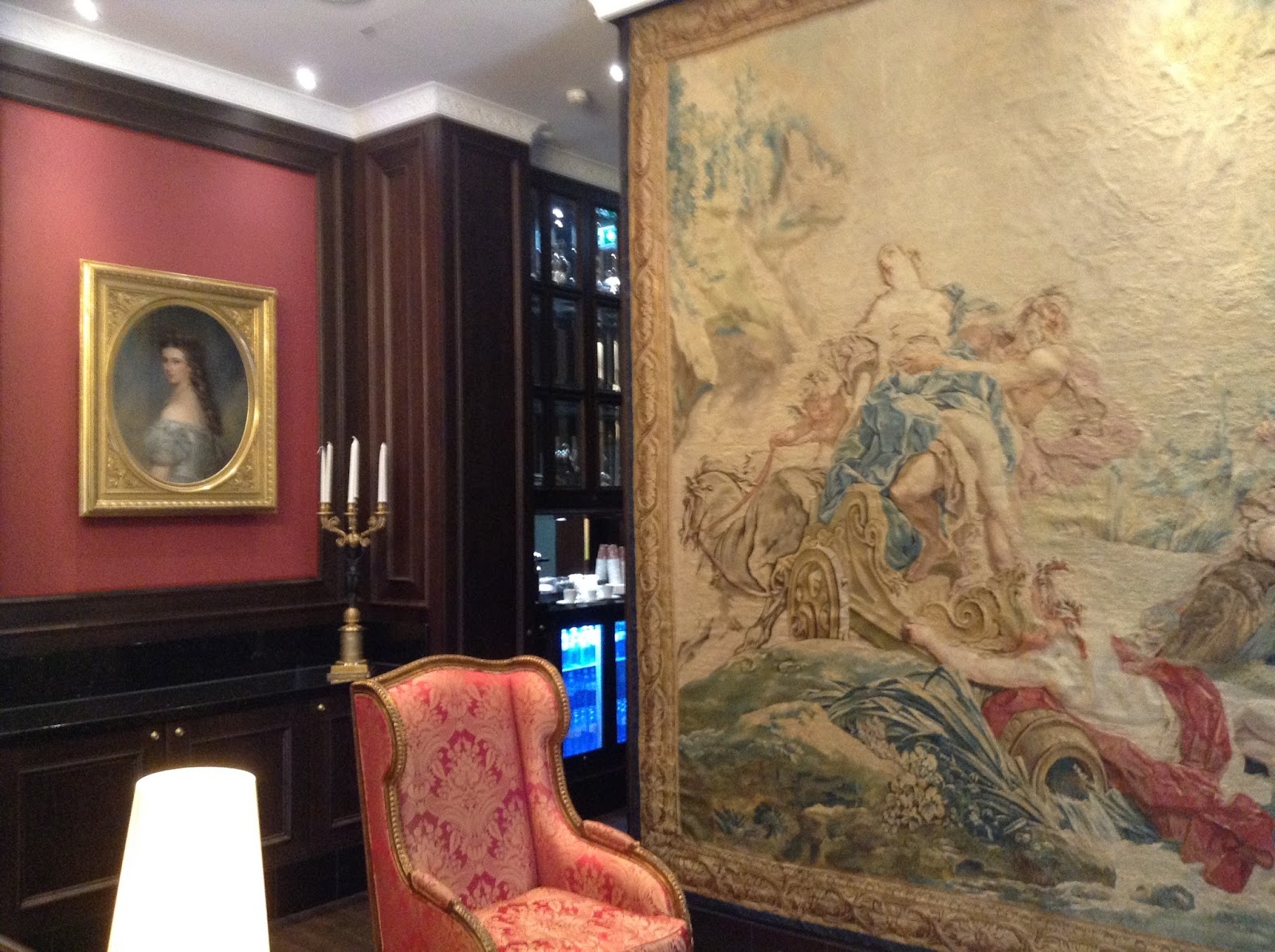
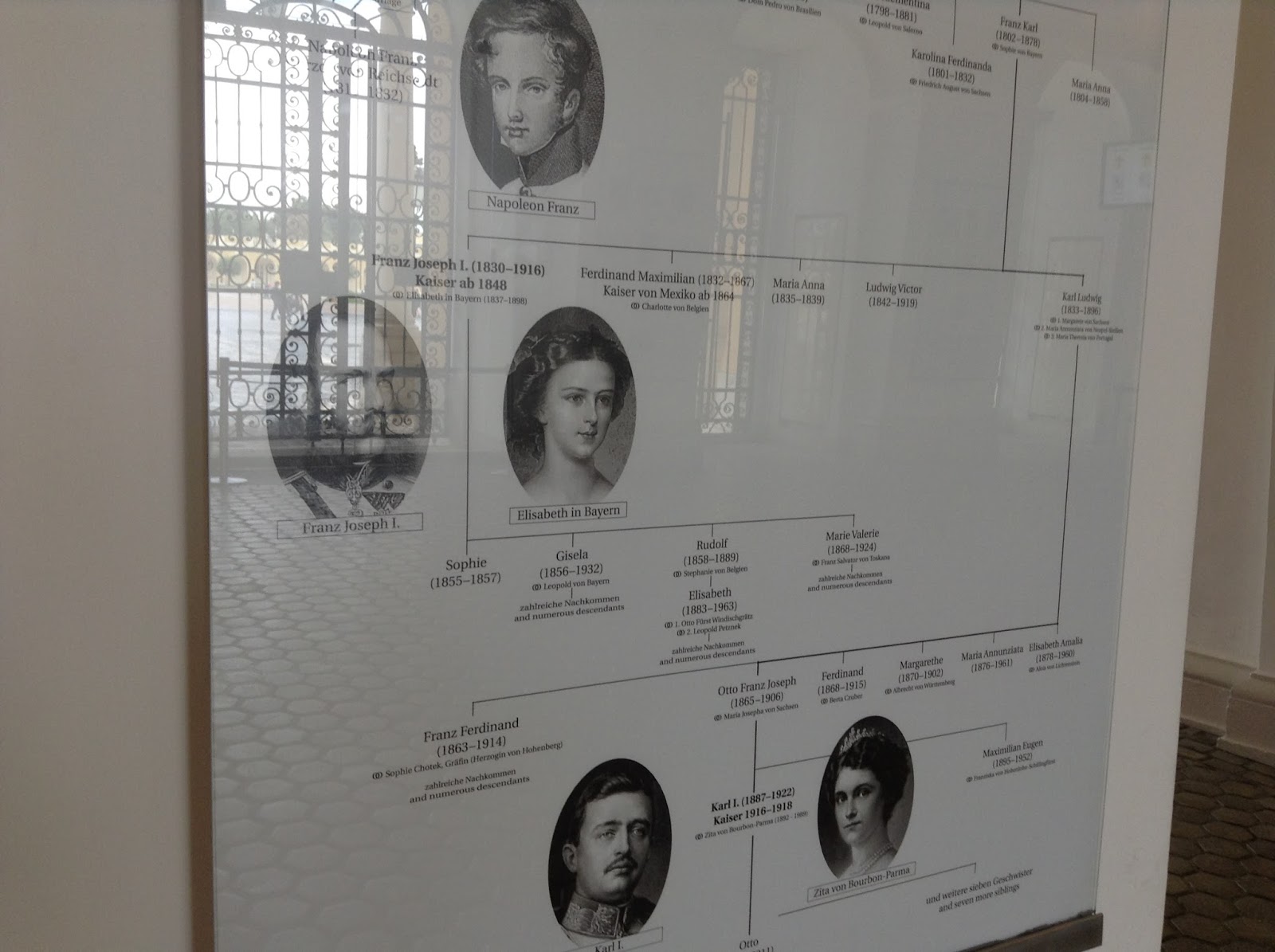
Vienna, as a major tourist destination, still capitalizes upon and cultivates that royal legacy with which they were born. You can feel it, you can see it plainly in what they emphasize in their presentation to us visitors.

Here are two pics from our Vienna hotel:

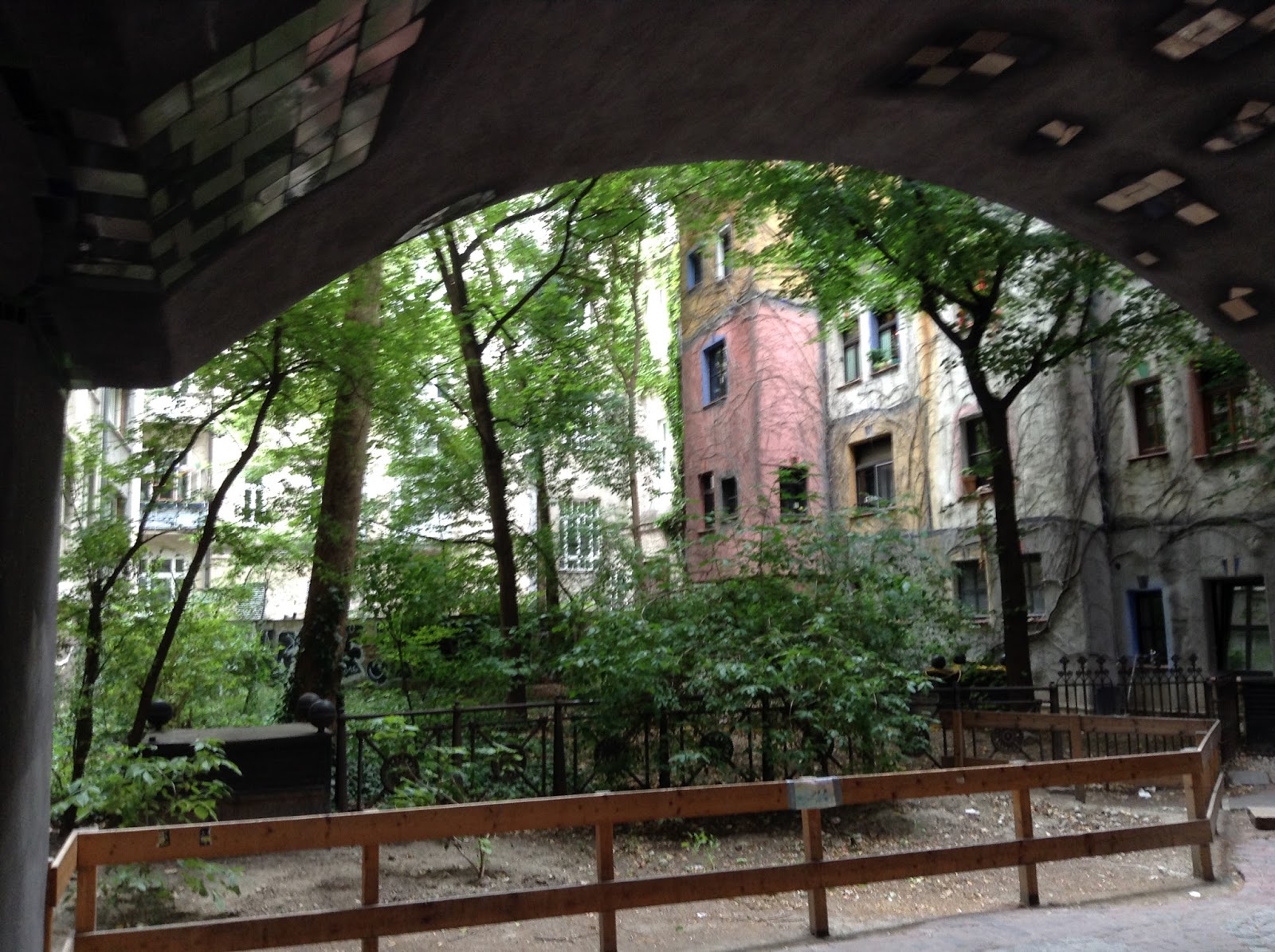
Compare this ambiance to  a pic I snapped from our first night in Prague:


You get the picture?

This morning in Hungary, I was recalling a statement that our Vienna tour guide had made when we were there last week. She was telling us about the financial patronage through which the Hapsburgs supported orchestral  Music in Vienna during the Classical Age, which was during a period  from about 1760 to 1810 or so.

Our guide spent a good while  talking about the Emperor's favored composers, Mozart and Haydn. The music of these two composers embodies the dignified, perfectly structured character of Classical Music as it was appreciated and financed by powerful, order-cultivating imperial benefactors. Our guide Iva also mentioned that, toward the end of the Classical period, Beethoven became a recipient who benefited from  those Hapsburg pursestrings. But Beethoven's status as a recipient of their order-cultivating, imperial patronage was somewhat questionable. His musical identity--his struggle to surpass the courtly bonds of Mozart/Haydn conventionality-- was always on the edge of something terribly new and disruptive. Ludwig stood, in fact, on the dizzying precipice of a new 19th-century eruption in music. And he knew it. His opus would not turn out to be a kind of music that proceeds from the calm waters of courtly, post baroque, Classical concerts.

Ludwig's music turned out to be expressive, emotional, even explosive. His orchestral movements were a harbinger of a newly-forming revolutionary age, a disruptive century to come. His booming symphonies resonated more with those Czech Bohemians than with his courtesan mentors Mozart and Haydn. Ludwig was a German from somewhere over there in the cauldron of  the Rhine/Ruhr, an upstart. And even though he was able to obtain support from the imperial coffers, he was never the comfortable courtesan composer like Mozart and Haydn had been.

Our Vienna guide, Iva, mentioned this. She explained that the the imperial support for that unpredictable young German was of a different nature. The times they were a-changing.  Ludvig von Beethoven wasn't the mere conveyor of those raucous new symphonic strains; he was an (if not the) originator of the  new romanticism in music. When Iva concluded her spiel on the great  music that had come out of imperial Vienna, I felt that there was something she had left out.

(Excuse me) "What about Strauss?" I asked.

Her answer surprised me.

She said that the Strauss music--the waltzes, the Blue Danube, et al which came later in the 19th-century--were considered by the  Vienna Establishment to be "pop music." They were equivalent to the "Dirty Dancing" of that time.

Strauss waltzes, the "Dirty dancing!" ?? of that day?

Duh! ????

She said that Strauss went to Chicago and did a concert for a hundred thousand people.

But that did not impress the Establishment in Vienna.  As far as they were concerned, Johann Strauss Jr and his thumping waltzes were in the same league with . . . dirty dancing.

I suppose the royals and their courtesans always preferred their little, intimate venues like this one in Vienna, a space where, as our Vienna guide explained, Mozart had done one of his last concerts.


I will never get a handle on how all this human art and music plays out.

Glass Chimera 

Tuesday, July 11, 2017

The End Room


For 600 years, a royal dynasty named Hapsburg ruled the vast European domains called Austria-Hungary.

In 1848, an emperor died; and so an emperor's son replaced him.  From 1848 onward, Emperor Franz Josef ruled the empire for almost 68 years, until his death in 1916.

Franz Josef had a nephew named Ferdinand, whose place in the extended family would later qualify him as the heir to the throne at the occasion of Franz Josef's death.


But Ferdinand never ascended to that throne,  because he was assassinated in 1914. This assassination happened in Sarajevo, Serbia, on June 28, 1914. It is considered by most historians to be the fatal event that sparked the powder-keg of militarized Europe and ignited World War I.

But before all that, when Emperor Franz Josef was still ruling over the quasi-peaceful Austro-Hungarian empire, and the Hapsburgs were still lolling along as royalties habitually did, the royal family spent their summers at their summer palace near Vienna.

It is a place called Schonbrunn.


We visited the palace at Schonbrunn as tourists. As I was walking through the "royal apartments," the audio-guide mentioned that Franz Josef was a real go-getter when it came to performing his roles as Emperor. I got the impression that he was a workaholic monarch who spent his entire day, every day, dealing with matters of state. It makes sense if you think about it, because. . .

Ruling over an empire is no easy task. But in fact, it ultimately proved to be an impossible task. After his nephew Ferdinand, the heir, was assassinated, things really got out of hand for Franz Josef and the Hapsburg monarchy.

The whole royal arrangement really started to unwind when he demanded restitution from them upstart Serbs down there in Sarajevo who had shot his nephew.

But a Serbian concession was not going to happen. The Serbs did not like being subjects to Austrian control; they wanted to have their own country. Franz Josef's ultimatum soon became a declaration of war.  Next thing anybody knows, there's a whole damn alliance-mongering world war exploding all over the place, because one very important man was shot to death. 

Cutting toward the chase here, I must say that about half-way through that war, the old Emperor Franz Josef died, in 1916. So the Austro-Hungarian Empire was in need of a new Emperor.

But nephew Ferdinand, the would-have-been heir, could not ascend to the throne at that time, because he had been assassinated.

Therefore, the scepter of royal authority of the house of Hapsburg passed to another nephew, Karl. Karl was the nephew of the nephew and therefore the next in line to be Emperor of the Austro-Hungarian empire.

But this would be no easy task for young Karl. The prospect of assuming that royal authority must have been, in the wrath of an escalating world war,  akin to accepting the gift of a hornet's nest. Most all the European potentates and their armies were mad as hell at the German Kaiser Wilhelm and his Austrian co-potentate, the erstwhile Emperor of Austria-Hungary. The wrath of Republican Europe was fast mounting fiercely to dismantle their Entente Axis of presumptuous military power.

But at a terrible cost: millions of lives perished in World War I.

Emperor Franz Josef's death in 1916, only half-way through the hostilities, was for Karl, more an overwhelming burden than some whoopdeedoo ascension to kingly privilege. His uncle's prickly challenge to the Serbs had rendered Europe into a grand bloody mess.

So in the year  1918, a scant two years after his accession to the throne, Karl was in no position to wheel and deal on behalf of Austria, or Hungary, or his supposed royal realms, or any other entity except, perhaps, for his immediate family. He was between a rock (Germany) and a hard place (the Allies who were hell-bent on demanding reparation from Germany and Austria.)

This was no easy position for a young monarch to be in.

As we traipsed through the royal apartments of Schonbrunn last Monday, the audio-guide informed me that I had just entered a certain room where, in 1918, a gang of both friends and foes of the Emperor had presented to young Karl his choices pertaining to the Empire.

Karl's choices were not pretty. The military leaders, diplomats, politicians in that room told him that they were taking the whole damn empire away from him and his family. He was in no position to argue with them, so that was where it all ended for the Hapsburgs. Therefore he had no choice but to concede to their demands.

So Karl and the Hapsburgs lost it all, right here in this room.

Except one thing. Karl refused to abdicate. He managed to slink away still having his title. 

Whatever that means, I thought, while standing there with all my fellow-tourists in the room where a 600-year empire had ended. Karl would still be Emperor, but emperor of what? His own kingdom exiled him.

At that moment, I accidentally snapped a contraband photo:


This is where it all ended for the legendary Hapsburgs. As cousin George said later, all things must pass.

Smoke

Monday, July 10, 2017

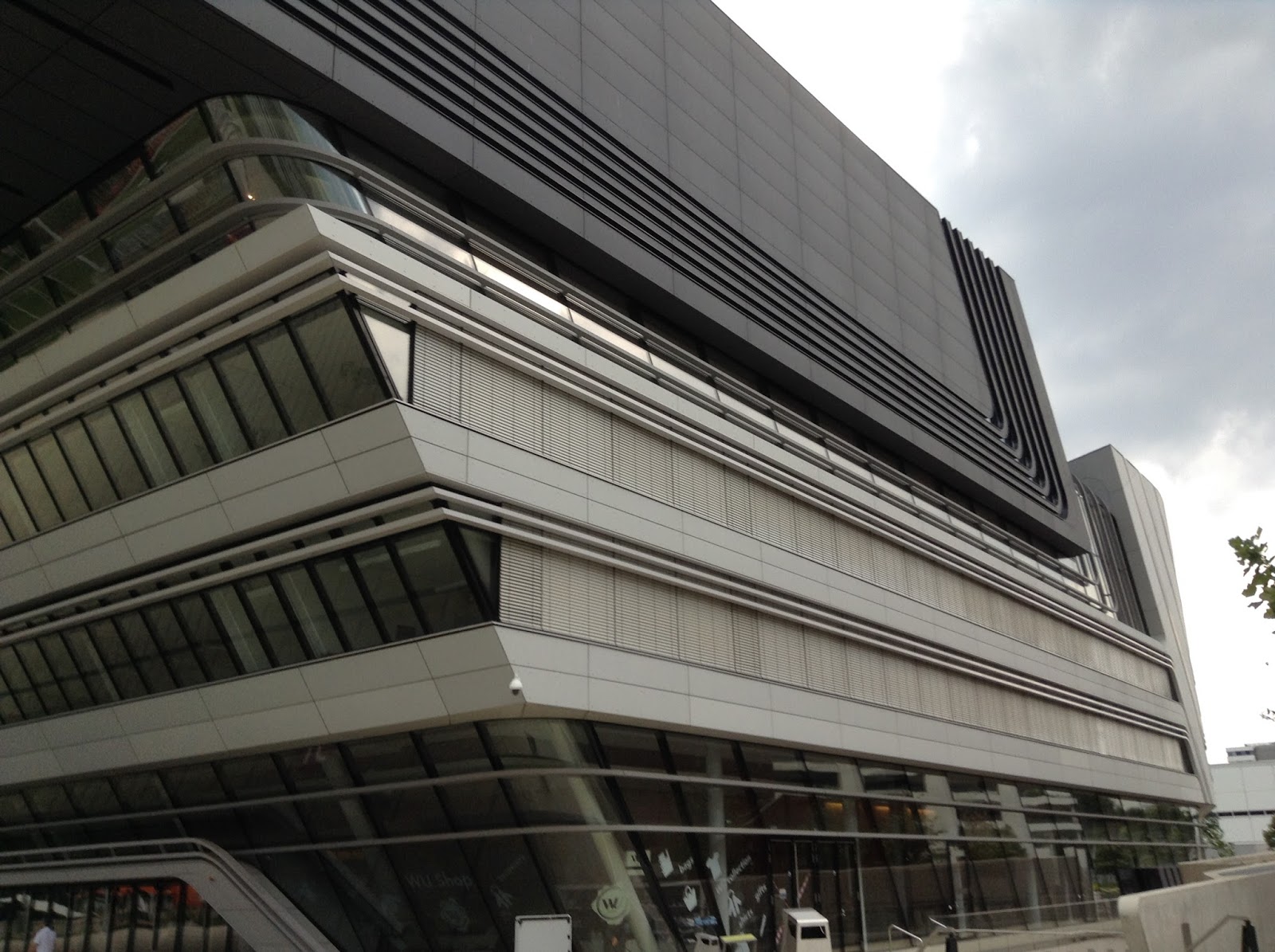
What's a building


What's a building to do?
Is it for some function or use,
or should it just stand there and look back at you?
Must the building pose, so proud and grand,
being stately, stable and strong,
or should it fulfill some meaningful plan?
Some say a building should blend with the earth;
thus it oughta be curvy and quirky.
allowing nature to re-greening its girth.
Others state that a building should be modern and sleek;
it oughta be angular, straight and clean
Then it can be filled with both workers and geeks.
It seems to me a building should be all of these things,
fulfilling all the purposes that human life brings,
allowing all shades of the gray, the browns and the greens,
thus fulfilling everyone's dreams.

Glass half-Full

Sunday, July 9, 2017

Peering through windows


Whether through windows of time

or a window of glass

we peer through,

maybe through the windowed pane

eyes of the artist who is

long gone yet

lives on

displaying legacy image for us

to view

through our window of time

into his memory of love

through her yielding to the pangs

of love

the pain of love


Yeah, windows golden with memory

they are

moments of love so

dear to him and her and now

to us

golden memories they are

images of what carried them forward

into future or carry us

backward into reflection

backward into history

where precious intricacies of the human mind and hand were

crafted for us or 

assembled for us


to see,

to view


through a glass darkly

through barriers of time

or glass

or gates of iron or the

gates


of Vienna

when the invaders had been turned away

and later where

the artist lived and breathed and

loved


and left a gift, their moment of prescious love

which came to be their

golden moment,  and later his gilded

memorial of love for us to

peer into,

before the gates could close again.


Smoke

Saturday, July 8, 2017

Vienna


My mama raised me to be a Catholic. Daddy wasn't into religion much.

After I grew up, and became a man who could/would relate to the world on my own terms--after I had reached the age of reason and I had decided for myself what this life was all about. . . after I had lived life to the full, and managed to do a few things right and many a thing wrong--after I had made a grand mess of my life, then allowed the Lord of the Universe, our Creator, to take hold of me at the ripe old age of 27 and turn me around and plant my wayward feet firmly in the ground of the gospel of Jesus Christ--after all that. . .
I met my wonderful little women, Pat from New Jersey. We got married in 1980 and by n' by she presented three lovely children to me. Eventually the kids grew up, became responsible adults, etc and, long story short, we have followed each one of them to various points of interest all over the world.

Our current adventure in following progeny has brought us to the wonderful city of Vienna, Austria.

Now I have to say that this is an amazing place. Walking around this city for just one evening has already taught me some profundities about what life is all about and where things came from, long before I was born. Previously unexplained elements of my childhood, my heritage as a Catholic kid who later turned born-again Christian, can now be contemplated from the perspectives of history itself, and the movement of certain people groups at various periods of time from the Old World to the New, which is to say, America.

I mean, we grow up and we see things and we don't really have a clue where all this stuff came from or how it got here and how we came to be in the midst of it all. In my case, I was a kid in the middle of the Deep South, in Mississippi in the 1950's. Growing up, snotty-nosed and clueless as I was, now I'm wondering how likely it could have been that I grew up Catholic instead of Southern Baptist.

Well, my mama was a French-American Catholic from Louisiana, and my daddy's people were from Scotch-Irish stock from up in the piney wood of Mississippi and before that they had come through Pennsylvania and before that from the old country, Ireland or Scotland or somewhere over there on the other side of the Pond.

So now, at this particular moment in time, it just so happens that I wake up this morning on the other side of the Pond, which is to say: now we are in Europe, the Old World, because yesterday (or maybe it was the day before that) we flew from America-- formerly the New World-- to this Old World, and one plane led to another and now I find myself in Vienna on a sunny morning and thanking God for such a wonderful life a the one we now find ourselves in.

As we strolled along the Karntnerstrasse last evening, we encountered this very impressive big cathedral structure, so I snapped a pic:


The immensity of history--what has gone before--is what I'm feeling as I pondered this structure. The erection of this church building took lifetimes of work and toil and sweat, and devotion, back in the days of the Holy Roman Empire, whatever that was, and its long tails of historical development through Peter and Paul and later Constantine and then all the Popes in Rome and eventually the Austro-Hungarian empire and the Hapsburgs and their hunky-dory relationship to the Catholic Church. . .

Until that fateful day in 1914 when the Archduke Franz Ferdinand got shot in Sarajevo by an angry young Serb and the Empire ended and the Old World ended and World War I dealt the final death blows to the ancient reins of power and the reigns of the royal houses that had ruled Europe for a couple a thousand years or so.

As I was pondering all this, we did stroll inside, into the Church at Stephensplatz. We found there a group of devoted Catholics celebrating Mass. This kind of thing has been going on here for a long time. And I don't care what you think or say about it . . . This was a good thing.


That devotional setting took me back to childhood memories of being Catholic because that's the way Mama raised me, even though Daddy wasn't into it.

So as I contemplated, and in some sense, entered into. . . the devotion of these congregants to their belief in the Lord Jesus Christ, and their expression of that devotion in the sacrifice of the Mass,  and as I reconciled in my mind between those ancient strains of high-church faith and the Protestant Reformation that later changed everything . . . right down to the johnny-come-lately tides of Charismata that had drawn me into my experience of the Christian faith in 1978, and my present appreciation for all that God has done for me and Pat and our grown-up children and their spouses. . . as I stood there in the quiet reverence of a tourist who just happened into a cathedral while other believers worshipped in their strange high-church way . . .

I could relate. I could relate to what they were feeling.

This morning, I can still feel it, devotion.

Devotion goes way back. This is a good thing.


King of Soul 

Wednesday, April 12, 2017

Ask not what the world can do for you


If the mandarins of this world want to manage everything from their databases

if they wannna fix everything so everyone is the same and everyone has the same

opportunities and all are equal in the eyes of world and all hues and colors and

shades of gray and shades of brown black and white blend together having the same

access to all the good stuff that this managed world has to offer such as

access to all the education, employment, electoral, and economically elevatable

opportunities that can be put together by the Fed and the IMF and the UN and the

G20 and the G-hundred and the G-thousand and all the world together appointing

managers who assure that everyone is on the same page and nobody

gets blowed up and and everybody is safe and secure and fat and happy

or slim and lean as the case may be

If the bureaucrats and the directors of this that and the other feel like they need to

manage all this stuff and turn back the rising tide of climate change

and the ancient, undeniable, irrevocable urge that rises between a man

and his woman

and therefore the renegade loins of men and women who unite in their beds every night

and ever day bringing forth all these children and this family

busting forth out of their mama's womb and then growing up in Africa or Indonesia

or Uruguay or Gary Indiana or Mesa Arizona or Mexico City or Moscow or Orlando

and if they feel the need to put a rein on all our emissions

all our carbon spewing forth from all our cars and our planes and trains

and our monorails and our leaping' lizards and leviathan whales and

our males and females,

and if they think they can manage all this and

turn the unquenchable tide of the life force and and the gaia

so that it becomes something other than what it is

which is the life force itself that comes

from the loins of a man

and the womb of his woman,

and then those subsequent young boisterous bucks and does

who spring forth from the loins of mankind

then let them come to Mickey's place and see

what its really all about.

Let them discover that the proletariat has now become

the bourgeoisie

with every man chomping down on his family's piece of the pie

and every woman bringing forth her children and proud

of it

and all those neuters who wish to not participate are

free to do so because

we'd all like to teach the world to sing in perfect harmony if

we could, buy hey

we'll settle for the next best thing, which is having youn'uns

and watching them grow and if you don't believe me then

come to Mickey's place and see

what's really going on.

You can't put a tether on this thing. We must be free

to live and work and have our being and have

our children and watch them grow

and hohoho every Christmas

and hiedee ho gonna get me a piece of the pie

you don't need to get it for me

gonna get it my own dam self

and for our kids too.

What's it to you?

Let them come to Mickey's place and see what's

really going on.


Ask not what the world can do for you,

but what together we can do for our children and our children's children.

Glass half-Full